









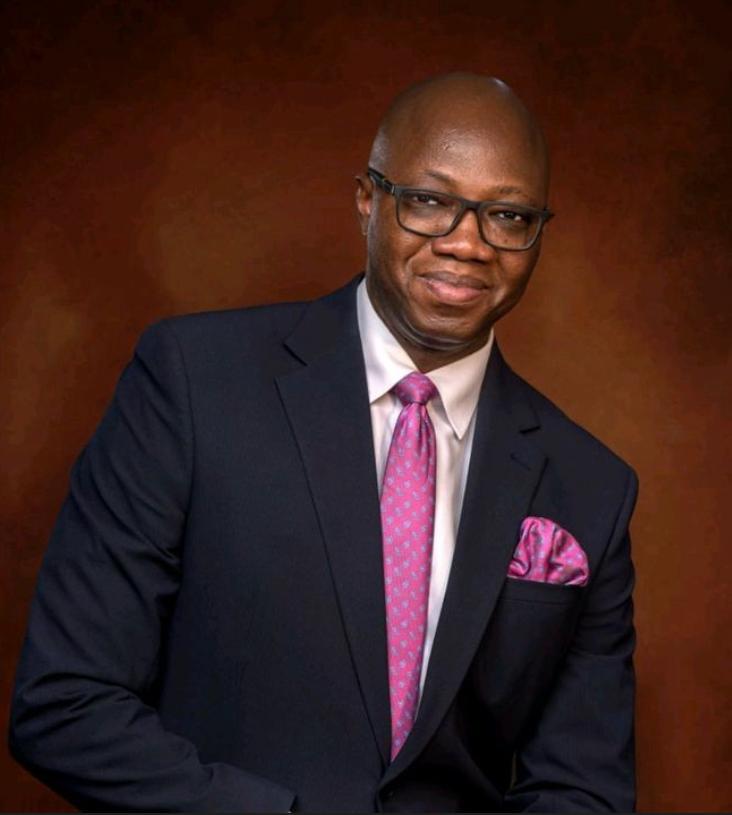
By Amofin Beulah Adeoye
The bridge between Kishi and Igbope did not attend Oyo State’s fiftieth-anniversary celebrations on 3 February 2026—nor was it invited. While political leaders gathered in Ibadan for speeches, plaques, and declarations of progress, the bridge lay collapsed in the river it was built to cross, a slab of concrete submerged in silence. It had remained in that state for over a year.
On a Friday morning just past daybreak, Madam Asisatu—a pepper trader in her early forties, backing a newborn baby whilst leading two other toddlers in tow—walked past its remains on her way from Kisi to Igbope. She balanced a basket of produce on her head and crossed the shallow stretch of water where vehicles once passed. She returned the same way that evening, just as we did. She did not attend “Kishi Day 2026” where celebrities converged; indeed, when we stopped to chat, she was oblivious to the fact that this second celebration was even occurring. The elites who attended the festivities took a bypass via Ogbomoso or Ilorin. The bridge did not merely collapse; it was bypassed—socially, economically, and politically.
That bridge is a more accurate assessment of governance than any anniversary address. While ceremonies unfolded in Ibadan, the arterial infrastructure meant to connect Oke Ogun to the rest of the state had quietly failed. The people wait, are mannered and patient, but patience is not infinite. This collapse was not an engineering defect; it was a political symptom. It reflected a governing culture that prioritized elite comfort over public necessity, even under administrations widely regarded as reformist. Even the most conscientious governments cannot claim legitimacy while whole regions remain functionally disconnected from the state they are said to belong to.
For fifty years, Oyo State has cycled through military administrators and civilian governors. Bureaucracies expanded. Offices multiplied. Roads were commissioned. Internally Generated Revenue rose from roughly ₦30 billion in 2018 to over ₦60 billion by 2024, according to National Bureau of Statistics estimates. Yet outcomes remained stubbornly unchanged. Bridges fail. Roads decay like the main road between Ajibode and Laniba in the heart of Ibadan itself. Institutional memory resets with every four-year election cycle. Leaders once celebrated fade into obscurity beneath the weight of unfinished promises.
History is unsentimental because its metric is simple. Power is not a possession; it is a loan. This is the mathematics of legitimacy. Power only becomes durable when raised to the exponent of the masses. Power raised to wealth buys insulation, not consent. Power raised to alliances remains hostage to shifting interests. Power raised to oligarchs narrows governance to elite convenience and accelerates alienation. These structures may survive temporarily, but they collapse when conditions change—just as the bridge between Kishi and Igbope did.
Oyo State offers an instructive counterexample in the political career of High Chief Rashidi Ladoja, now His Imperial Majesty Adewolu Ladoja. During his tenure as governor, he was removed through the violent intrusion of the legislature by non-state actors. By conventional political logic, his authority should have collapsed. Instead, he turned to the courts, returned through the law, and re-entered public life with legitimacy intact. He did not treat office as a private entitlement or godfather-managed property. When he sought reelection later and was rejected repeatedly, he accepted the verdict. His relevance endured precisely because legitimacy, once earned, outlives office.
This same principle is visible in the tenure of Governor Seyi Makinde. His acknowledgment that political outcomes belong ultimately to the people reflects an understanding of legitimacy that has shaped his electoral success. His record, though imperfect, distinguishes governance grounded in consent from rule sustained by factional engineering. When addressing aggrieved youths in Ibadan on Sunday 08 February 2026, he remarked that the sun was still out and its heat still sufficient to dry their wet clothes before 2027. The remark was both reassurance and an invitation to accountability.
The law of legitimacy is universal. Paul Kagame inherited a Rwanda devastated by genocide and institutional collapse. His authority was not negotiated among elites but constructed through restoring security, dignity, and daily functionality. His power endured because it answered the population’s demand for stability and reconstruction. Lee Kuan Yew offered another proof. Their methods differed; the mathematics did not. Both aligned power with collective aspiration rather than elite satisfaction.
Measured against this universal standard, the posture of Oyo State’s entrenched Ibadan political establishment appears increasingly fragile. For decades, inherited influence framed politics as a closed circuit—access controlled, dissent managed, and citizens reassured that “demography is destiny.” In practice, this translated into political office without power and participation without consequence for the other four zones of the state: Oyo, Ibarapa, Ogbomoso, and Oke Ogun.
The claim that demography is destiny has long served as a justification for stagnation. History teaches otherwise. Power that resists the people accumulates tension; power that aligns with them accumulates legitimacy. Exclusion matures into resentment. Inclusion, even under imperfect governance, earns patience. Leadership is not measured by monuments or tenure length but by institutional survival. Governance is surgical work—messy, difficult, and often thankless. The operation must succeed, or nothing else matters.
To raise power to the exponent of the masses and secure durability, leaders must do three difficult things:
- Replace theatrical performance with results. Trust is not built on billboards but on roads that endure, clinics with medicine, and schools that function.
- Withdraw from elite echo chambers. Governance does not occur in insulated boardrooms but in markets where policy failure is immediately felt. Dissent is a diagnostic instrument, not a threat.
- Offer a future, not merely manage the present. Citizens will endure hardship if they believe it purchases long-term dignity. Anticipatory leadership converts sacrifice into consent.
As Oyo State crosses its fiftieth year, the choice is stark. It can continue to commemorate progress while the bridge remains broken, or it can confront failure and rebuild with intention. History will not remember the anniversary banquet; it will remember whether Madam Asisatu had to wade through a riverbed to reach the market. The bridge is broken. The blueprint for repair exists. What remains is the courage to acknowledge failure and to build governance that truly holds and truly connects Oke Ogun to Ibadan.


